
When one page is right
One page is the default for early-to-mid career applications with one to a handful of relevant roles. The constraint itself is useful: it forces you to keep only the roles, bullets and skills that support this specific application, which usually produces a stronger resume than a longer, less selective one.
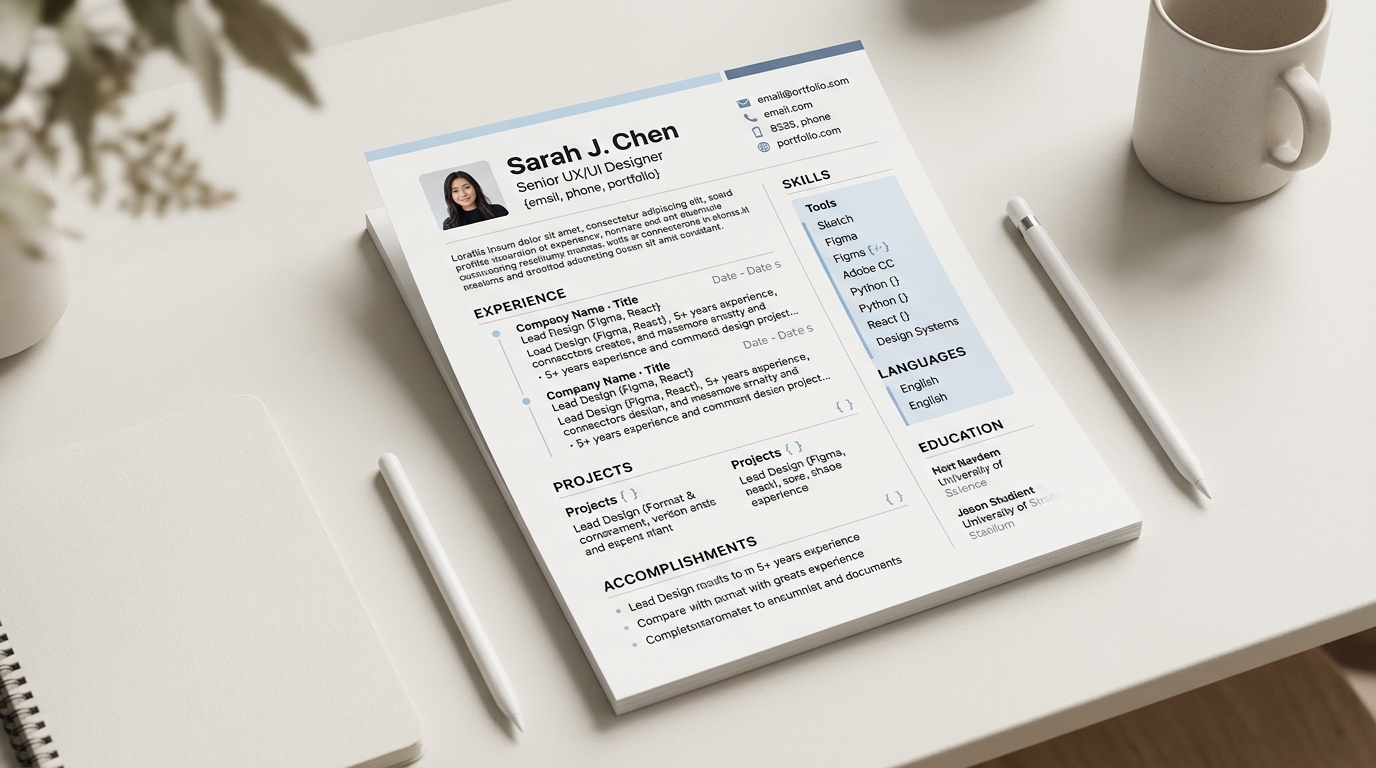
One page is also the right length whenever a space-efficient two-column layout - like this app's Compact template - is already doing the work of fitting more onto the page cleanly, rather than shrinking margins and font size to force a fit that should not exist.
When two pages earns its length
Two pages earns its length once there is genuinely a decade or more of relevant roles to describe, or once you are in a field where supporting detail - a technical project list, publications, patents, speaking engagements - is itself evidence of the level you are applying at. The second page should be full of that kind of material, not white space or restated duties.
A senior or executive resume commonly runs two pages for the same underlying reason: describing a longer, higher-scope track record honestly takes more room than an early-career one does. The length should track the actual amount of distinct, relevant material, not a target you are filling in.
What actually affects the right length
Years of relevant experience is the biggest factor, but not the only one. A career-change resume is often shorter even at ten years in, because older roles in a different field carry less weight for the new one and get compressed to a line each. A field where reviewers expect supporting detail - research, engineering, design portfolios - tends to run longer at the same seniority level.
Layout affects it too. A dense two-column template holds noticeably more content per page than a spacious single-column one at the same font size, so "how long should it be" and "which template" are related questions rather than independent ones.
What to cut first when it runs long
Cut roles beyond roughly ten to fifteen years back unless a specific role is directly relevant to this application. Compress rather than delete - a single line with title, company and dates keeps the timeline reading as continuous, without the detail an older, less relevant role no longer needs.
Cut duty-restating bullets before cutting real achievements. A line that only restates the job title in sentence form -
“Responsible for day-to-day operations of the support team”
- adds length without adding information, and is usually the easiest thing to remove without losing anything a reader needed.
Frequently asked questions
- Is a two-page resume automatically worse than a one-page one?
- No. A padded one-page resume with tiny margins and undersized type reads worse than a clean two-page one. Length should follow how much genuinely relevant material there is to include, not the other way around.
- Does a two-column layout let me fit more without running to two pages?
- Often yes - a side column runs skills, credentials or short lists in parallel with the main column instead of stacking everything in sequence. The Compact template here is built around exactly that trade-off.
- Should a career changer's resume be longer or shorter?
- Usually shorter than their total years of experience alone would suggest, since roles in the previous field carry less evidentiary weight for the new one and get compressed to single lines, which frees up space for whatever is actually transferable.
- What about a curriculum vitae (CV) instead of a resume?
- A CV is a different, typically much longer document used mainly in academia and some international contexts, listing publications, grants and teaching history in full. This guide covers the one-to-two-page resume format used for most industry roles.